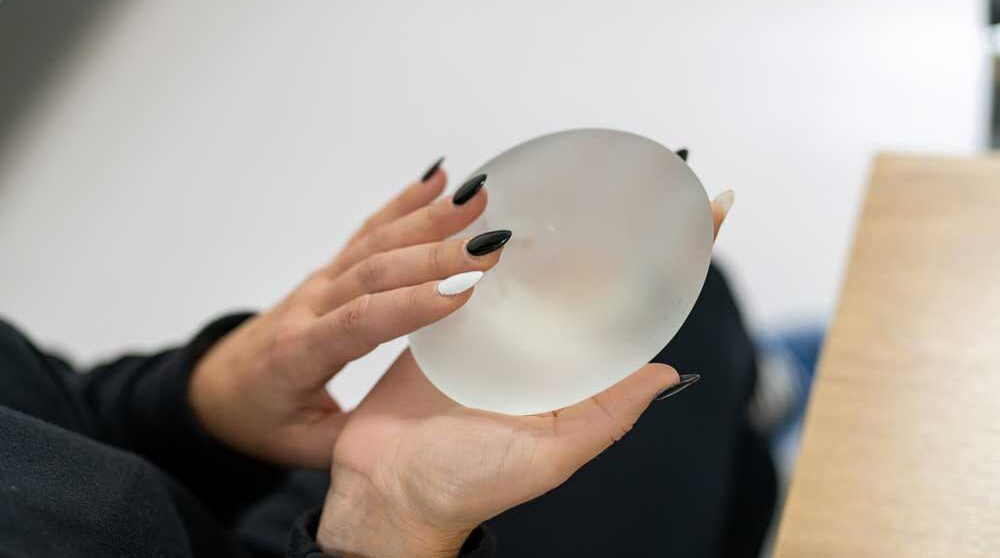
Breast augmentation is one of the most personal decisions you’ll ever make. And yet, so many patients walk into their first consultation focused on one thing: cup size. Yes, cup size is a good starting point, but it’s far from the whole story.
The reality is that two women could get the exact same implants and end up with completely different outcomes. Your frame, your chest width, your existing breast tissue and even your posture all play a role in how an implant will actually look on you. Understanding which factors affect how your breasts will look ensures you’ll walk away with results you’ll absolutely love.
Why Cup Size Doesn’t Tell the Full Story
Let’s get this out of the way: cup sizes are notoriously inconsistent. It’s a sizing system that was invented in the 1930s to make it easier for women to find a bra that fits, but has never been officially standardized, so a 34C at one retailer might be completely different than a 34C at another. When you tell your surgeon, “I want to be a C cup,” it’s worth asking what that means to you.
Dr. Michael Hakimi, a board-certified plastic surgeon in Beverly Hills specializing in breast and body contouring, takes a more dimensional approach. Rather than chasing a letter on a tag, he focuses on how implants interact with your unique anatomy. That means measuring your chest wall, evaluating your skin elasticity and discussing the look you’re going for, whether that’s subtle and natural or noticeably fuller.
What’s the Deal With Implant Volume?
Implant volume is measured in cubic centimeters (cc), giving you a much clearer picture than cup size ever could. Breast implants can be on the smaller side at 150cc, or go all the way up to 800cc, but the majority of patients choose something in the 300cc to 450cc range.
While bigger generally does mean fuller, volume alone doesn’t determine your outcome. A 350cc implant will look dramatically different on a woman with a petite frame compared to someone with broader shoulders and a wider chest. Context matters.
During your consultation, Dr. Hakimi will help you visualize the results of different implant sizes. He’ll explain how your natural measurements affect the final outcome and may have you experiment with sizers, which are soft, weighted devices that can be placed into your bra to give you an idea of what to expect after surgery. It’s a low-tech solution that offers surprisingly accurate insight into your future results.
What Is Implant Profile, and Why Does It Matter?
If volume is the “how much,” profile is the “how far.” Implant profile refers to how much the implant projects forward from your chest wall. There are typically four profile options to consider:
- Low-profile implants have a wide base with less outward projection. They create a subtle, natural slope and work well for patients with a broader chest who want a modest enhancement.
- Moderate implants offer a balanced look. Not too flat, not too projected. This is a popular choice for patients seeking a natural appearance with a bit more fullness.
- Moderate plus (or moderate high) implants sit between moderate and high, giving you added projection without going full dramatic. They’re a great middle ground for many body types.
- High-profile implants have a narrower base and more forward projection. They’re ideal for patients with a narrower chest who want noticeable fullness, or for those who simply prefer noticeable results and more defined cleavage.
Choosing the right profile is about proportion. A high-profile implant on a broad chest might look unnaturally round, while a low-profile implant on a narrow frame could appear too flat. Dr. Hakimi considers all of these factors when making recommendations, ensuring the implant you choose complements your natural contours.
Matching Implants to Your Body Type
Your body shape plays a significant role in determining which implant will look best on you. Generally, here’s what most plastic surgeons recommend for specific body types.
Petite Frames
Women with slimmer builds often worry about looking “overdone” after breast augmentation, but with the right implant selection, you can absolutely achieve natural-looking results. Moderate or high-profile implants in smaller volumes (typically 250cc to 350cc) tend to work well for petite patients. These options create forward projection without requiring a wide base that could extend beyond your natural breast boundaries.
Athletic Body Types
Athletic women tend to benefit from moderate implants (in both size and projection) for the best of both worlds when it comes to comfort and mobility. Implant type also matters. Moderate to low Motiva implants are becoming a popular choice for runners, weightlifters and athletes, as they adapt to your body’s natural movements. Motiva implants are also less prone to rippling, making them a great choice for subglandular placement (above the chest muscle), avoiding the “animation deformity” that can sometimes occur when implants are below the chest muscle.
Curvier Figures
If you have fuller hips and a naturally curvier build, you have a bit more flexibility when it comes to implant selection, simply because a wider range of volumes and profiles can look proportionate on this body type. You have more room to decide exactly how much enhancement you want.
That said, balance is still important. Curvier patients find that a moderate profile maintains the most natural harmony with their existing proportions. Going too large or choosing the wrong profile can throw off the visual balance between your upper and lower body. Dr. Hakimi helps patients find the sweet spot where their results feel like an enhancement rather than a departure from their natural shape.
Narrow Chests
Patients with a narrow chest wall face a unique consideration: base width. Every implant has a specific diameter, and ideally, that diameter should match or stay within your natural breast footprint. If an implant’s base is too wide for your frame, it can create an unnatural appearance or cause the implants to sit too close together.
Higher-profile implants solve this problem by offering more forward projection with a narrower base. This allows narrow-chested patients to achieve noticeable fullness without the implant extending into the armpit area or creating a “side boob” effect. It’s a smart solution that Dr. Hakimi frequently recommends for patients in this category.
The Importance of Personalized Assessment
These guidelines offer a helpful starting point, but they’re not rules. Every patient is different, and factors like skin elasticity, nipple position and personal aesthetic goals all influence the final recommendation. A woman with a petite frame might actually prefer a fuller look, while someone with a curvier figure might want something subtle. Both are completely valid choices.
This is why Dr. Hakimi dedicates significant time to the consultation process. He believes that understanding you is just as important as taking measurements. When you leave his Beverly Hills office, you should feel confident that your surgical plan was designed specifically for your body and your vision.
Find Your Perfect Implants at Hakimi Plastic Surgery
Choosing your implant size and profile isn’t something you need to figure out alone. In fact, that’s exactly what the consultation process is designed for.
After performing thousands of breast augmentation procedures, Dr. Hakimi has developed a highly individualized approach to implant selection that prioritizes proportional balance. He spends time with each patient, listening to their goals, answering questions and providing honest feedback about what’s achievable. He doesn’t push trends or chase fads. He focuses on creating results that look natural, feel right and stand the test of time.
If you’re considering breast augmentation and want guidance from a surgeon who prioritizes transparency and artistry, schedule a consultation at Hakimi Plastic Surgery. You can reach the Beverly Hills office by calling 424-239-5201 or completing our online contact form.